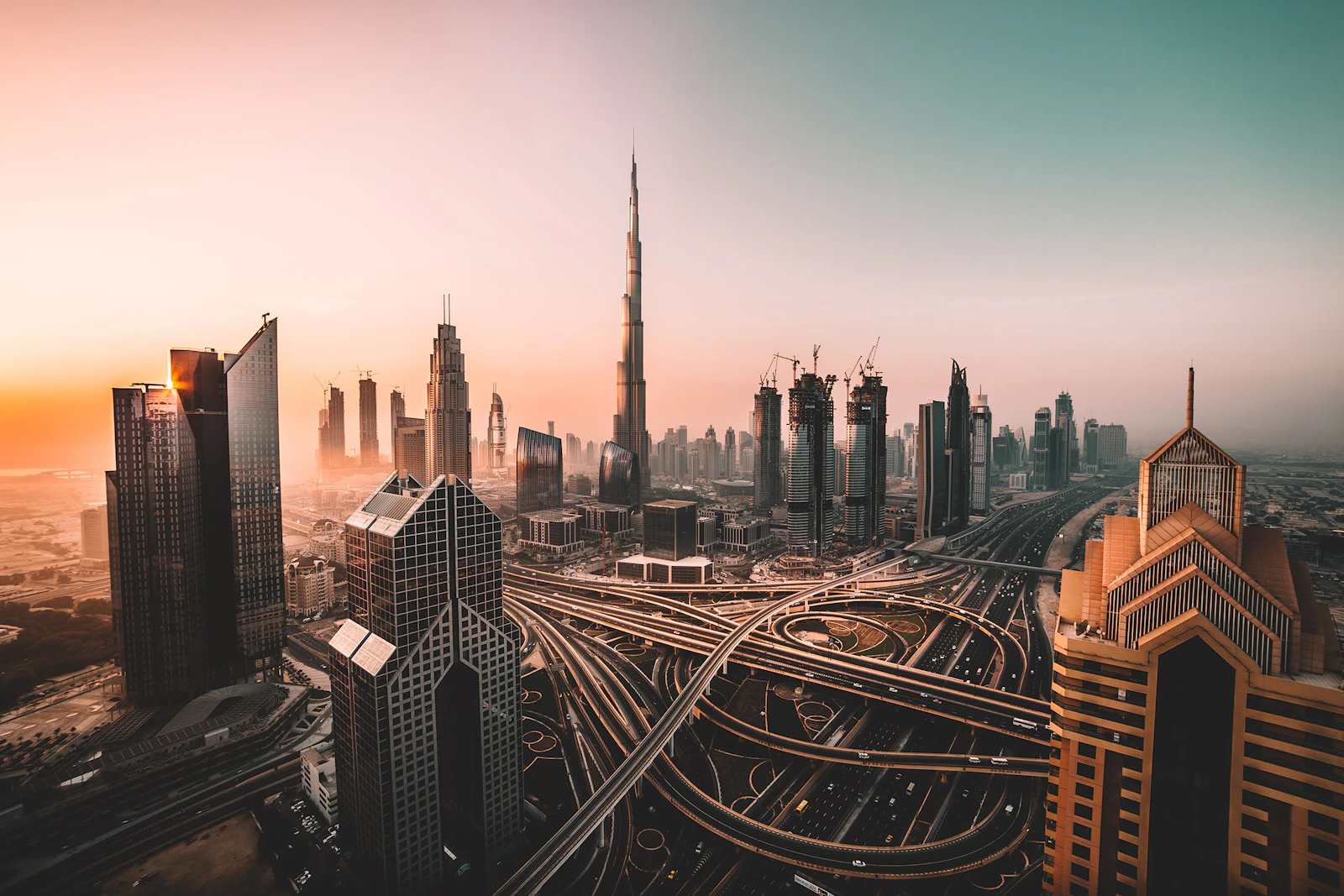
A decade ago, green building credentials in the Gulf were largely a matter of positioning — a way for premium developments to distinguish themselves. That era has closed. Sustainability requirements are now embedded in regulation across the Emirates, reinforced by national commitments to decarbonisation and by investor and occupier expectations that have shifted decisively.
For project teams, the consequence is practical rather than philosophical. Sustainability requirements shape design, procurement, construction methods, commissioning, and documentation. Integrated from the outset, they are manageable and frequently cost-neutral over an asset’s life. Discovered late, they force redesign, rework, and delay at precisely the point when both are most expensive.
The regulatory landscape differs across the Emirates
The UAE does not operate a single uniform green building regime. Different emirates have established their own frameworks, and projects must comply with the one applicable to their location. Dubai operates its green building regulations and the Al Sa’fat rating system; Abu Dhabi applies the Estidama framework and its Pearl Rating System. Internationally recognised systems such as LEED are also widely pursued, often alongside local requirements, particularly where international investors or occupiers are involved.
The first task on any project is therefore to establish precisely which regime applies, what rating level is targeted or required, and whether local and international certifications are both in scope. Assuming a framework rather than confirming it is a common and costly error.
Why late integration is expensive
Sustainability performance is determined overwhelmingly by decisions taken early — orientation, massing, envelope specification, and systems selection. These are the decisions that set energy and water performance, and they become progressively harder and more expensive to revisit as design develops.
A project that reaches detailed design or, worse, construction before confronting its sustainability obligations faces an unattractive set of options: redesign at significant cost and delay, expensive technological compensation for a fundamentally inefficient design, or a compliance shortfall with regulatory and reputational consequences. None of these is necessary. All of them stem from treating sustainability as a specialist workstream running alongside the project rather than a design driver within it.
Integrating requirements into delivery
Managing sustainability well is largely a matter of ordinary project management discipline applied to a specific technical domain.
- Establish the applicable regime, target rating, and certification scope before concept design is fixed.
- Translate requirements into explicit design criteria and specification clauses, rather than leaving them as aspirations.
- Bring sustainability expertise into the design team early enough to influence orientation, envelope, and systems decisions.
- Reflect certification submissions, modelling, and documentation as real activities in the programme, with durations and dependencies.
- Carry compliance requirements into procurement so that specified materials and equipment genuinely meet them.
- Plan commissioning and performance verification properly, as certification frequently depends on demonstrated rather than designed performance.
The commercial case has strengthened
Sustainability is increasingly justified on commercial rather than regulatory grounds alone. Efficient buildings cost less to operate across a lifecycle that dwarfs the construction period. Certified assets are more attractive to institutional investors with their own environmental commitments, and to corporate occupiers whose leasing decisions now reflect reporting obligations. In a market where much of the built stock is comparatively new, the differentiation between efficient and inefficient assets is becoming steadily more visible in value.
For project sponsors, this reframes the question. The relevant analysis is not the capital premium of sustainable design in isolation, but its effect on operating cost, asset value, marketability, and regulatory exposure across the asset’s life — an assessment that increasingly favours doing it properly and early.
Sustainability performance is set by early design decisions. A project that leaves it to the compliance stage has already made most of the choices that determine the outcome.
Key takeaways
- 1Green building regimes differ by emirate — confirm the applicable framework and target rating before concept design is fixed.
- 2Early design decisions determine sustainability performance; late integration forces expensive redesign or compensation.
- 3Treat certification, modelling, and commissioning as real programme activities with durations and dependencies.
- 4The commercial case now rests on lifecycle cost, asset value, and marketability, not compliance alone.
Frequently asked questions
Which green building system applies to my project?
It depends on the emirate and jurisdiction in which the project sits, and sometimes on the master developer or free zone. Dubai and Abu Dhabi operate distinct frameworks, and international systems such as LEED are frequently pursued in parallel. Confirm the applicable requirements at the outset.
Does sustainable design increase construction cost?
It can increase capital cost, though efficient early design frequently limits the premium substantially. The more meaningful assessment considers lifecycle operating cost, asset value, and marketability, where the balance typically favours sustainable design.
When should sustainability consultants join a project?
At concept stage. Their influence on orientation, massing, envelope, and systems selection is where most performance is won, and that window closes as design develops.